
Lattice for Small Business by Kainora

Independent dental practices

A stronger business behind your independent dental practice

Protect earnings. Make better use of staff time. Reduce how much depends on you and a few indispensable people.

For owners of general and specialty practices exploring a practical, measured first step with AI.

Please do not include patient records or financial statements in your inquiry.

A dentist and two colleagues review a procedure folio around a table in a dental practice.
A dependable team creates more room for the owner to focus. AI-generated conceptual scene.

Watch

A short introduction for practice owners

See how one everyday business routine could become more dependable — with a fictional practice example.

AI-narrated film1:33Captions

AI-narrated film using the ElevenLabs “Brian” voice, with original instrumental music generated with ElevenLabs. Script by Oleg Cohen / Kainora. The scenes are AI-generated conceptual images of fictional people and practice spaces. The workflow is illustrative; it is not a dental-client result.

Request a briefing invitation

Bring one recurring business problem. Patient records and financial statements are not needed to request an invitation.

Read the video transcript

Your practice can be busy and still depend on you for too many everyday business decisions.

American Dental Association research on general practitioners shows expenses rising faster than revenue, while net income fell across two five-year periods.

And among dentists recruiting hygienists, almost nine in ten reported serious difficulty.

Lattice by Kainora starts with one useful capability: something your team can do reliably, with familiar AI tools and human judgment.

Imagine your office manager is away when a vendor renewal arrives. A named backup finds the approved routine, checks the deadline, and knows who can approve. A person reviews the work. Lessons improve the next handoff.

Build from a common foundation, then shape the responsibilities around your general or specialty practice.

Start with fictional examples and approved procedures. Keep patient data out. Measure fewer interruptions, correct completion, and verified savings. Time freed is capacity, not automatically cash.

See the approach in an introductory briefing. Bring one recurring business problem. Early conversations will help shape the offering. Request your invitation on this page.

Chart descriptions and sources

The first chart compares pooled 2016–2020 with pooled 2021–2025 for general practitioners, inflation-adjusted, per dentist, on one scale from −10% to +10%: revenue +1.4%, expenses +4.9%, net income −8.1%. These are changes between two five-year periods, not annual changes; they are national averages, not independent-practice results or practice EBITDA. Source: ADA Health Policy Institute — Trends in Dentists’ Income, Revenue, and Hours Worked (2026 update).

The second chart shows 88.3% on a 0–100% bar: the share of surveyed dentists recruiting hygienists in the third quarter of 2026 who described recruiting as very or extremely challenging. It is not the share of offices with a vacancy. Source: ADA Health Policy Institute — The State of the U.S. Dental Economy, Q3 2026.

Listen

Listen to the idea behind the offering

A concise narrated adaptation with a fictional example — not a word-for-word reading of the complete article.

AI-narrated adaptation6:59MP3, 6.7 MB

AI-narrated adaptation using the ElevenLabs “Brian” voice. Script by Oleg Cohen / Kainora.

Read the transcript

A stronger business behind your independent dental practice.

Think about a recent working day. The schedule was busy. Your team was doing its best. Yet a routine business question still found its way to you. Perhaps someone was away. Perhaps the instructions were unclear. Perhaps the answer existed, but only one person knew where to find it.

Now imagine that responsibility working more reliably. Someone owns it. A backup understands it. The approved instructions are easy to find. And everyone knows when an exception needs your decision.

That is the opportunity Kainora is exploring with Lattice for independent dental practices. The aim is practical: protect earnings, make better use of staff time, and reduce how much depends on the owner or a few indispensable people.

There is a business reason to pay attention. The American Dental Association’s research compares two five-year periods: twenty sixteen through twenty twenty, and twenty twenty-one through twenty twenty-five. In inflation-adjusted averages for general practitioners, expenses grew faster than revenue, and net income declined. Those national findings are context, not a diagnosis of your practice.

Recruiting is difficult too. In the ADA’s third-quarter twenty twenty-six survey, almost nine in ten dentists who were recruiting hygienists described it as very or extremely challenging. That is a finding about people recruiting for the role, not about every dental office.

The competitive environment is also changing. The ADA reports that the share of dentists affiliated with dental support organizations more than doubled between twenty fifteen and twenty twenty-four. DSO affiliation does not necessarily mean private-equity ownership.

The useful response is to examine what your own practice could become able to do more consistently. Where does valuable time disappear? What becomes difficult when an experienced employee is away? Which decisions keep returning to you because responsibility is unclear?

These questions lead to business capabilities. A capability is simply something the practice can do reliably. Cover a recurring administrative responsibility. Review a cost before renewal. Prepare a useful weekly business review. Resolve a familiar exception without reconstructing the answer each time.

Each capability needs more than a document. It needs a responsible person, usable knowledge, an agreed way of working, limits on authority, and a way to tell whether it works. AI can help people find relevant instructions, prepare a draft, or organize an explanation. The practice still needs people to check the output and make the decisions.

Consider a fictional example. An office manager is away when a vendor renewal notice arrives. A colleague sees it, but does not know whether the price has already been reviewed or who can approve a change. The problem eventually reaches the dentist.

A proposed improvement starts before the next absence. Establish a renewal routine. Name a backup. Record the decision deadline and the approval rule. Make the current instructions easy to use. Then try the routine with a fictional notice and see what happens.

Can the backup complete the steps correctly? Is escalation clear? Does the owner receive fewer routine interruptions? If a real expense later changes, does the invoice confirm the saving? The practice can check confidential amounts privately. This example does not require patient information.

Suppose the exercise reveals a missing instruction. The practice reviews it, approves a correction, and tries again. Now the next person benefits from what the team learned. That is a small but meaningful way to make the business less dependent on individual memory.

The starting point should reflect the specialty. A general practice may choose administrative coverage. A prosthodontic practice may want clearer laboratory coordination responsibilities. An endodontic practice may examine referral-response procedures. An orthodontic practice may focus on consistent handoffs over a longer treatment relationship.

The initial exercises would use fictional cases and approved procedures. Applying those routines to identifiable patients would require a separate, appropriately governed scope. The purpose is to establish a useful business model before introducing more complex data or automation.

Measurement matters from the beginning. For one practice, success might mean a backup completing a task correctly. For another, it might mean fewer interruptions, less rework, or a verified recurring-cost reduction. Decide what matters before making the change.

Also distinguish time from money. An hour released creates capacity. It becomes a cash saving only if paid costs change. It creates additional financial value if it supports profitable work that actually happens. Faster collections improve cash timing, but they are not automatically new revenue. The decision should include fees, provider costs, and your team’s implementation time.

Kainora is developing this offering for nonclinical operations, with familiar AI tools and human oversight. The initial scope is designed to work without sending patient records or confidential financial information to Oleg Cohen or Kainora. Patient data also stays out of the AI provider’s workspace in this initial scope. Access rules, permitted material, and review responsibilities need to be explicit.

This is an early offering. The examples describe intended work, not results already demonstrated in dental clients. A paid engagement would have its own scope, measures, responsibilities, and costs.

The next step is an introductory briefing and a demonstration using a fictional practice. See a recognizable problem, examine the proposed way of handling it, and discuss what evidence would make an improvement worthwhile for your own business. Early conversations will help shape the first general-practice and specialty capabilities.

If that sounds relevant, use the invitation link on this page. You can request briefing details without sending patient records or financial statements. Timing and participation details will be confirmed directly.

Bring one question with you: what recurring part of the business would you most like to make dependable?

Lattice by Kainora. A stronger business behind your independent dental practice.

How much of the business still depends on you?

The schedule is busy. Your team works hard. Yet a routine question interrupts treatment, an employee’s absence exposes a gap, or an administrative issue follows you home. The work gets done because somebody remembers, stays late, or asks you.

Consider what would change if more of that work had a dependable owner, a usable procedure, a trained backup, and a clear route for exceptions. You could spend less time reconstructing what happened and more time deciding what deserves your attention.

That is the opportunity behind Lattice by Kainora for independent dental practices: build a few useful business capabilities, support them with familiar AI tools, and measure whether they make the practice stronger.

Why the business deserves attention now

National research gives owners a reason to examine their operations. The American Dental Association’s Health Policy Institute found that, comparing pooled 2016–2020 with pooled 2021–2025, inflation-adjusted revenue per general practitioner rose 1.4%, expenses rose 4.9%, and net income fell 8.1%. Those are national averages across two periods, not a prediction for your practice. [1]

Staffing adds pressure. In the ADA’s third-quarter 2026 survey, 88.3% of dentists recruiting hygienists described it as very or extremely challenging. That figure applies to respondents recruiting for the role; it does not mean 88.3% of all offices have a vacancy. [2]

The competitive environment is changing too. The ADA reports that 16.1% of U.S. dentists were affiliated with dental support organizations in 2024, compared with 7.2% in 2015. Affiliation is not the same as private-equity ownership. [3]

For an independent owner, these findings invite a practical question: which parts of the business could become more dependable with the people and resources already available? A full schedule and rising collections deserve to be considered alongside costs, coordination, and the demands placed on the owner.

Start with a capability you can recognize

A capability is something the practice can do reliably. “Cover an administrative responsibility when the usual person is away” is one. “Review recurring costs before renewal” is another. Each needs people, knowledge, a way of working, authority to act, and evidence of the result.

A sensible first engagement would identify one or two recurring problems, agree on the outcome, and establish a small baseline. Kainora would help make the relevant knowledge usable, clarify responsibility, introduce appropriate AI assistance, and review what changed with the owner.

Examples include a backup who can complete an approved routine correctly, an owner who receives a concise weekly business review, or a team that resolves a recurring administrative exception without starting from scratch each time. These are proposed starting points for the offering, not claims of proven dental-client results.

Picture one ordinary absence

Two dental practice colleagues review an organized procedure binder together.
Useful knowledge can be shared, practiced, and carried into the next working day. AI-generated conceptual scene.

Consider a fictional practice whose office manager normally handles nonclinical vendor renewals. While that person is away, a renewal notice arrives. Nobody knows whether the price was already reviewed, who can approve a change, or where the relevant instructions live.

The proposed improvement is straightforward: an approved renewal routine, a named backup, the decision deadline, and a clear spending-approval rule. AI can help the backup locate and interpret the approved instructions or draft a question for review. A person checks the answer and retains authority over the decision.

The test is concrete. Can the backup handle the routine correctly? Does the owner receive fewer avoidable interruptions? If a cost changes, does the subsequent invoice confirm it? The practice can assess confidential amounts privately. No patient information is needed for this example.

When the exercise reveals an unclear instruction, the practice approves a correction. That learning becomes part of the next person’s guidance. This is how experience can remain useful beyond the employee who originally acquired it.

Shape the work around your practice and specialty
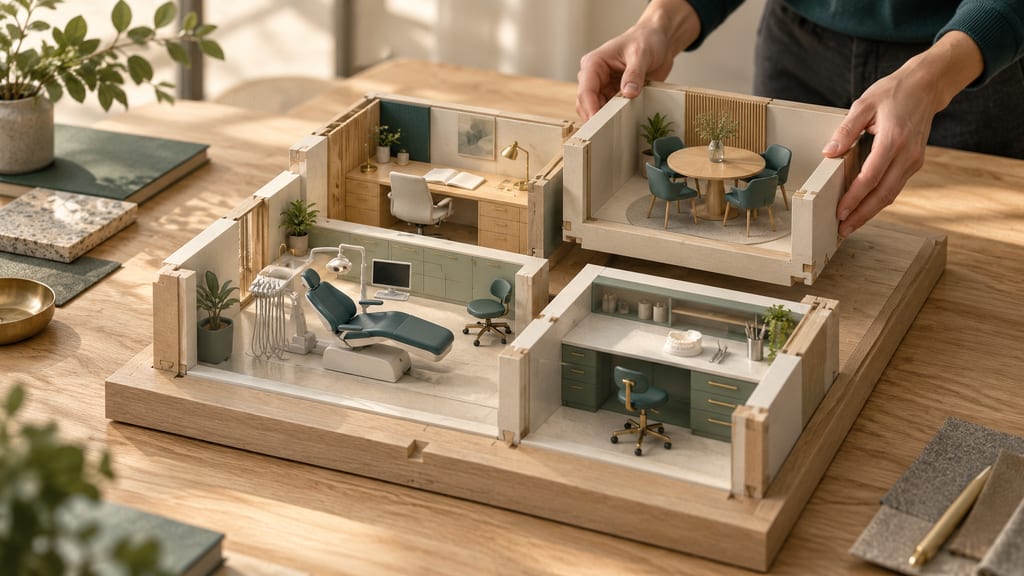
Hands assemble a modular model containing dental treatment, laboratory, administrative, and team spaces.
A common foundation, shaped around the work of each practice and specialty. AI-generated conceptual model.

General and specialty practices have different operating priorities. A general practice might begin with administrative coverage or recurring-cost review. A prosthodontic practice might start by designing clearer laboratory coordination responsibilities. An endodontic practice might examine referral-response procedures. An orthodontic practice might focus on consistent administrative handoffs over a longer treatment relationship.

The first exercises use fictional examples, approved procedures, and business responsibilities. Applying a workflow to identifiable patient cases would require a separate, appropriately governed scope. A specialty label alone does not make a workflow safe or economically useful.

The foundation is a practical model of how your business works: the responsibilities, prerequisites, decisions, exceptions, and measures that connect a useful outcome to everyday work.

Make the value visible

Before starting, agree on what would make the work worthwhile. For team continuity, it might be correct completion by a trained backup. For owner dependence, it might be fewer routine interruptions. For overhead, it might be a verified reduction in a recurring expense.

Keep time released, cash saved, and revenue contribution separate. An hour made available is useful capacity; it becomes financial value only when it changes paid cost or supports additional profitable work. Faster collections improve cash timing and are not automatically new revenue.

The practice can retain its financial detail and calculate its own economics. Any results shared with Kainora should be explicitly approved and described according to how they were verified. Fees, provider subscriptions, and staff implementation time all belong in the decision.

The commitment is to a defined improvement process and honest measurement. The decision to continue should follow evidence from your practice.

Start small, with clear boundaries

The initial offering is being developed for nonclinical practice operations. It is designed to begin without sending patient records or confidential financial information to Oleg Cohen or Kainora. Demonstrations use a fictional practice.

The proposed setup uses a familiar AI provider’s workspace and practice-approved material. People review outputs and retain decision authority. Patient data stays outside the initial scope, including uploads to the AI provider. Access, permitted material, and review responsibilities must be agreed before use.

A separately scoped paid engagement would define the work, measures, responsibilities, fees, and provider costs. You can explore the approach before deciding whether it fits your business.

See what this could mean for your practice

Kainora is inviting independent general and specialty practice owners to express interest in an introductory briefing and a demonstration using a fictional practice. The discussion will connect an everyday operating problem to a proposed improvement and a way to judge its value.

Early conversations will help shape the first practice and specialty capabilities. Engagement availability will depend on fit and implementation capacity. Briefing timing and participation details will be confirmed directly.

Bring one question: what recurring part of the business would you most like to make dependable? There is no need to send patient records or financial statements to request an invitation.

Research and source notes

Reviewed October 24, 2026. These sources describe industry conditions; they do not establish results from a Lattice dental deployment.

  1. ADA Health Policy Institute — Trends in Dentists’ Income, Revenue, and Hours Worked (2026 update)

    Slide 10. Inflation-adjusted general-practitioner averages; pooled 2016–2020 versus pooled 2021–2025. These are per-dentist measures, not practice EBITDA.

    Back to cited passage
  2. ADA Health Policy Institute — The State of the U.S. Dental Economy, Q3 2026

    Slide 23. Recruiting difficulty is among surveyed dentists recruiting hygienists, not among all practices. The survey is not restricted to independent offices.

    Back to cited passage
  3. ADA Health Policy Institute — The U.S. Dentist Workforce, 2025 update

    Slide 31. DSO affiliation among U.S. dentists in 2024. It is not the share of practices, patients, or private-equity ownership.

    Back to cited passage